Parodi Ligure · IT
Nell’abbazia di San Remigio, Parodi Ligure entra nella rete di MON-ART. Ottanta operatori culturali, una mappa del territorio da costruire e un’idea: dalla regola benedettina ora et labora a una nuova regola per gli artisti, crea et labora.
Incontro del 30 maggio 2026
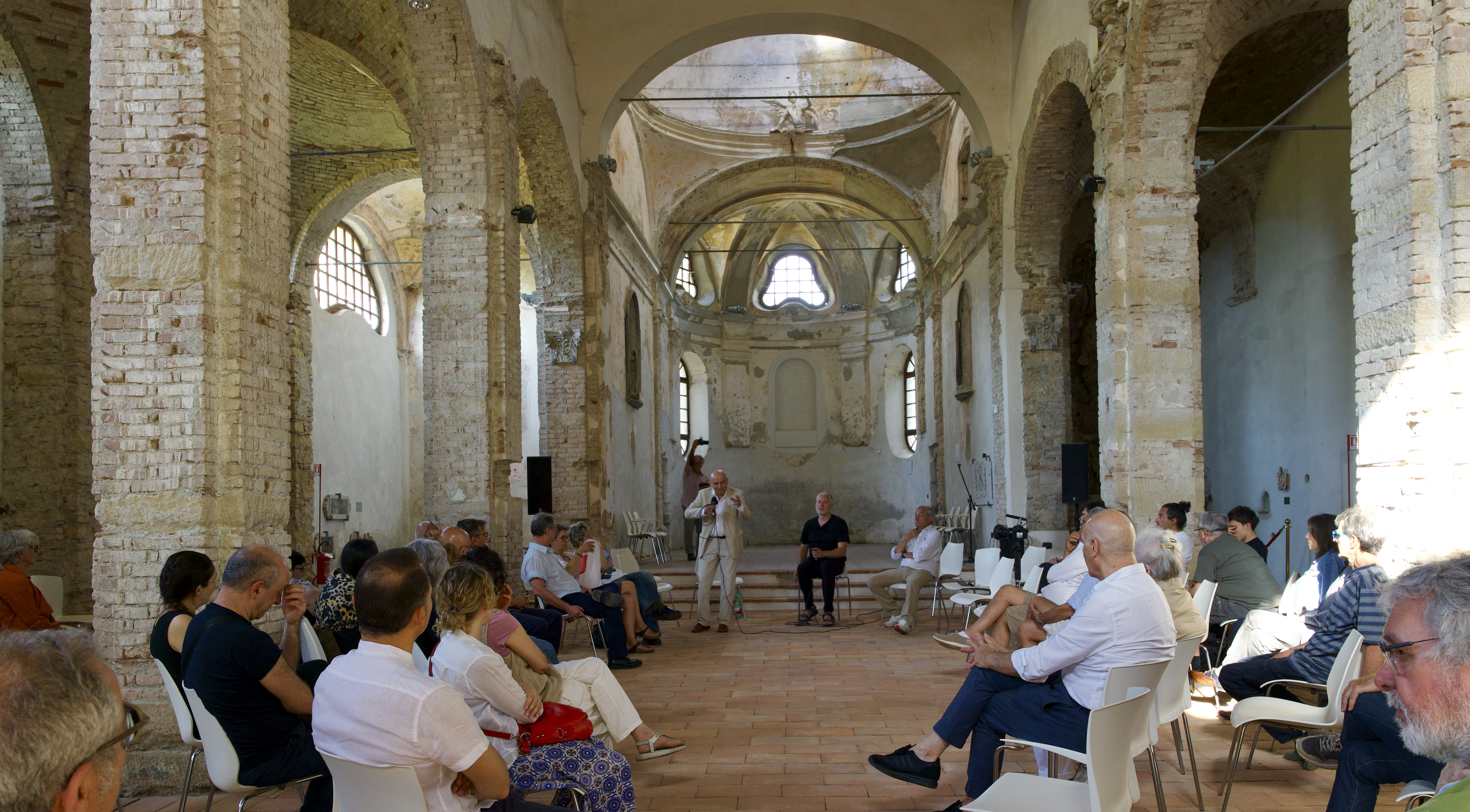
All’incontro che si è svolto il 30 maggio 2026 nell’abbazia di San Remigio, a Parodi Ligure, hanno partecipato ottanta operatori culturali del territorio. I saluti del sindaco hanno aperto il percorso del progetto europeo, lasciando subito la parola a Francesco Arecco, che ha illustrato gli obiettivi di MON-ART e il ruolo che auspica per Parodi Ligure. Il dialogo con i partecipanti è stato sciolto e proficuo.
Come nasce la rete
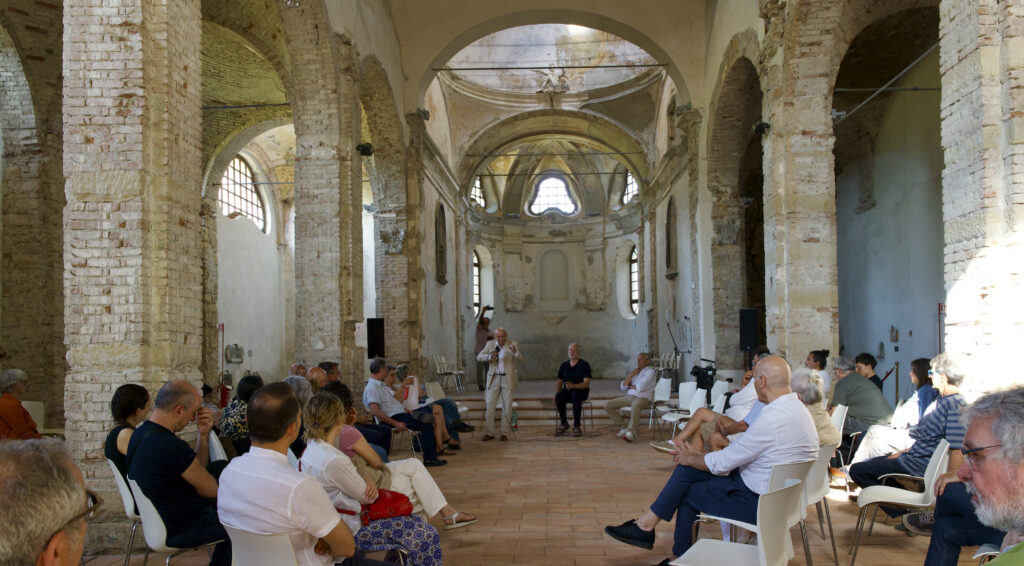
Le esperienze nel mondo della cultura non sono sempre lineari, ha ricordato Arecco, ma quando si fa rete la collaborazione produce sempre risultati. Il primo incontro risale a cinque anni fa, a Ovada, con Mirko Martelli ed Eugenio De Caro: già allora si parlava di un possibile progetto dedicato ai monasteri. De Caro aveva apprezzato l’atmosfera dell’abbazia e aveva voluto valorizzarne le potenzialità collegandola a Gibellina, che ospita alcune opere di Arecco.
Arecco ha poi illustrato la rete di MON-ART: Gibellina, al centro del Mediterraneo; Parma, con il CSAC, uno dei più importanti archivi della comunicazione in Europa; i partner di Albania, Bulgaria, Cipro e Ungheria. A queste realtà si uniranno il vescovado di San Rocco a Trapani e il San Fedele di Milano, allargando ulteriormente la rete.
Crea et labora
De Caro ha proposto alcune riflessioni sulla rigenerazione culturale di un territorio che mille anni fa era una palude. Da un monastero benedettino di Parma arrivarono dei monaci che scelsero questo luogo per viverci e operarvi per sempre, secondo la regola ora et labora dei seguaci di Benedetto da Norcia.
Per De Caro quella preghiera può essere portata avanti in forma laica dall’artista, che nelle residenze ospitate dal monastero pratica una nuova regola: crea et labora. La funzione che i monasteri benedettini hanno svolto, e la regola che hanno creato, oggi alla base della civiltà europea, può diventare un modello di rigenerazione spirituale ma anche civica.
Dall’ora et labora dei monaci al crea et labora degli artisti.
In Bulgaria, vicino al Mar Nero, De Caro racconta di aver visto una mappa del 1200 coperta di puntini rossi: monasteri sparsi in tutta l’Europa di oggi, dalla Svezia all’Andalusia. Quei monasteri erano un modello di cultura e di economia; anche il sapere medico è passato attraverso le loro farmacie. Oggi, secondo De Caro, possiamo ripartire da lì per ritrovare lo spirito che ha fondato l’Europa.
Robert Schuman lanciò l’idea di una pace con la Germania sconfitta: non volle spartire un bottino di guerra, ma condividere un’idea di cooperazione, da cui nacque la Comunità europea del carbone e dell’acciaio, primo nucleo di un’Europa che ha la pace come pilastro. MON-ART è fedele a quell’idea: un’Europa delle regioni, capaci di formulare proposte molto interessanti. Le istituzioni europee le approvano e i governi nazionali le adottano, ma una civiltà che nasce dal basso può essere costruita in modo nuovo anche attraverso l’arte.
De Caro ha legato la preghiera all’atto creativo. La preghiera, ha spiegato, è un pensiero originario che richiede una corporeità capace di sospendere l’ingaggio con il mondo e di concentrarsi sulla mente. Quando il pensiero nasce da questa esperienza, si torna a toccare la materia in modo nuovo, generativo. L’artista scioglie l’argilla, le dà una forma che ha un senso e cerca il momento originario in cui si percepisce il significato della realtà; e auspica che anche gli altri possano ripercorrere questa esperienza rigenerativa.
Il pubblico può partecipare a questa esperienza, anche se l’arte contemporanea è più difficile da vivere. L’arte rigeneratrice di MON-ART non si esaurisce in un oggetto: si trasferisce sulla comunità, in un processo di co-creazione. Per questo i sei mesi della residenza devono continuare a produrre effetti anche dopo la sua conclusione.
Una mappa per il territorio
Arecco ha confermato che anche il territorio avverte questi problemi e ha sottolineato l’importanza di chiedere all’Europa di finanziare la rigenerazione dei territori attraverso l’arte: le opere saranno il catalizzatore che unisce forze umane e culturali.
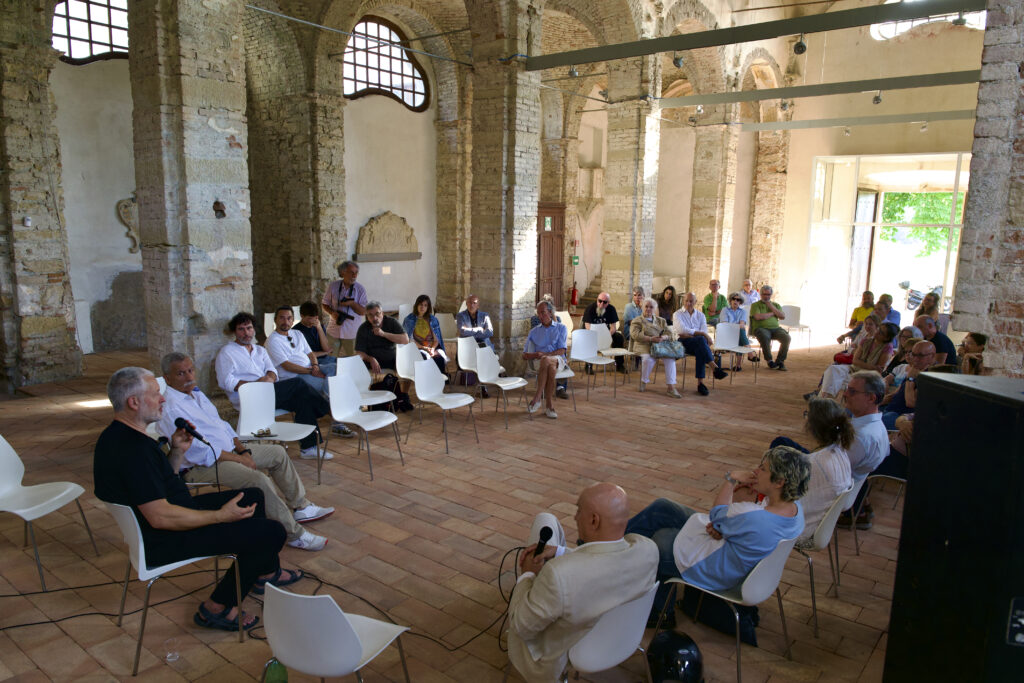
In Liguria, per il momento, non ci sono spazi pronti ad accogliere una residenza d’arte. C’è però la volontà di fare qualcosa di più ambizioso, a partire da qui: una ricerca che passa attraverso le persone e una mappatura del territorio, che coinvolgerà le scuole già attive e il Festival, destinato a diventare permanente. Arecco si è impegnato a raccogliere le competenze di scenografi, storici, autori teatrali, musicisti e cantanti per costruire un modello di geografia artistica, con il sogno di annodare fili con la Tunisia e i Balcani.
Spesso gli artisti non si conoscono tra loro. Arecco cercherà di incoraggiare networking e collaborazioni innovative, coinvolgendo anche l’associazione “Due sotto l’ombrello” di Ovada. La mappatura inviterà non solo le scuole ma anche le imprese, e l’abbazia di San Remigio ospiterà la mappa delle risorse artistiche del territorio.
Dopo gli interventi
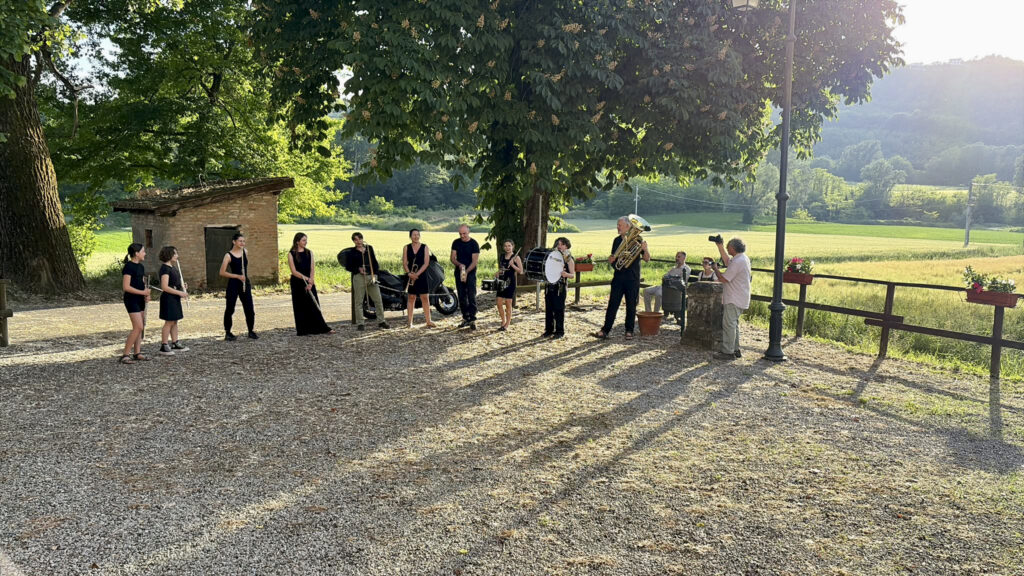
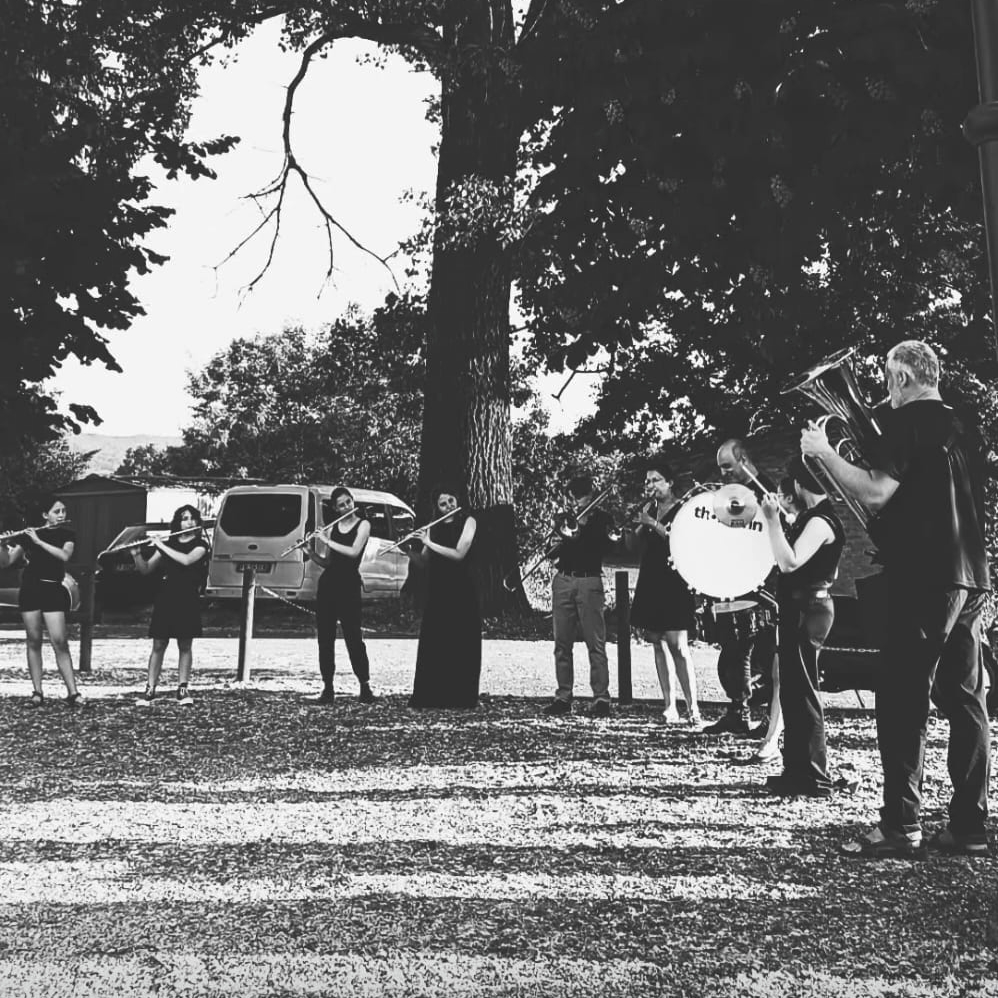
Ai partecipanti, già riuniti in un gruppo di lavoro WhatsApp, è stato consegnato un segnalibro con i link principali al progetto e alla mappa culturale del territorio. È stato inoltre chiesto di compilare un modulo che fotografa il panorama culturale locale all’avvio del progetto e le necessità avvertite: sono state così gettate le basi per attività formative e progetti comuni. Dopo il concerto di un gruppo giovanile, la serata è proseguita con un aperitivo offerto dal progetto, momento di convivialità e di networking.
Verso il 2028
Per febbraio 2028 è prevista una manifestazione conclusiva nell’abbazia di Valserena, meglio conosciuta come la Certosa di Parma grazie a Stendhal. Vi parteciperanno tutti coloro che avranno contribuito in modo creativo al progetto.
In breve
Quando · 30 maggio 2026
Dove · abbazia di San Remigio, Parodi Ligure
Partecipanti · 80 operatori culturali del territorio
Interventi · il sindaco di Parodi Ligure, Francesco Arecco, Eugenio De Caro
Prossima tappa · evento conclusivo, febbraio 2028, abbazia di Valserena (Parma)
Leggi anche: Il significato di MON-ART · Valserena & San Leonardo
Parodi Ligure · EN
At the Abbey of San Remigio, Parodi Ligure joins the MON-ART network. Eighty cultural practitioners, a map of the area still to be drawn, and one idea: from the Benedictine rule ora et labora to a new rule for artists, crea et labora.
Meeting of 30 May 2026
The meeting, held on 30 May 2026 at the Abbey of San Remigio in Parodi Ligure, brought together eighty cultural practitioners from the local area. The mayor’s welcoming remarks opened the European project’s journey, after which he handed over to Francesco Arecco, who explained MON-ART’s objectives and the role he envisages for Parodi Ligure. The discussion with participants was open, informal and productive.
How the network began
Experiences in the cultural sector do not always follow a straight path, Arecco said, but networking and collaboration always produce results. He recalled a first meeting five years ago in Ovada with Mirko Martelli and Eugenio De Caro, when they already discussed a possible project dedicated to monasteries. De Caro was struck by the atmosphere of the abbey and wanted to enhance the site’s potential by connecting it with Gibellina, which hosts several artworks by Arecco.
Arecco then presented the MON-ART network: Gibellina, at the heart of the Mediterranean; Parma, home to CSAC, one of Europe’s most important communication archives; and the partners in Albania, Bulgaria, Cyprus and Hungary. They will be joined by the Bishop’s Palace of San Rocco in Trapani and San Fedele in Milan, further expanding the network.
Crea et labora
De Caro reflected on the cultural regeneration of an area that was marshland a thousand years ago. Monks came from a Benedictine monastery in Parma and chose to devote their lives to this place, working here permanently according to the rule of ora et labora (“pray and work”) followed by the disciples of Saint Benedict of Norcia.
For De Caro, that prayer can be carried on in secular form by the artist, who in the residencies hosted by the monastery follows a new rule: crea et labora (“create and work”). The role played by Benedictine monasteries, and the rule they created, now at the foundation of European civilisation, can become a model for spiritual as well as civic regeneration.
From the monks’ ora et labora to the artists’ crea et labora.
In Bulgaria, near the Black Sea, De Caro recalled seeing a thirteenth-century map covered in red dots: monasteries spread across today’s Europe, from Sweden to Andalusia. Those monasteries were models of culture and economic life; medical knowledge, too, was passed on through their pharmacies. Today, De Caro argued, we can draw on that legacy to rediscover the spirit that founded Europe.
Robert Schuman proposed peace with a defeated Germany: not sharing out the spoils of war, but sharing a vision of cooperation. From it came the European Coal and Steel Community, the first core of a Europe built on peace. MON-ART remains faithful to that idea: a Europe of regions capable of highly innovative proposals. The European institutions approve them and national governments adopt them, but a civilisation built from the ground up can also take new shape through art.
De Caro linked prayer to the creative act. Prayer, he explained, is an original form of thought that requires an embodied experience in which engagement with the world is suspended and attention turns to the mind. When thought emerges from that experience, we touch matter in a new, generative way. The artist works the clay, gives it meaningful form and seeks the original moment in which the meaning of reality is perceived, hoping that others, too, can retrace this regenerative experience.
The public can share in this experience, even though contemporary art can be harder to engage with. In MON-ART, regenerative art does not end in an object: it passes to the community through a process of co-creation. That is why the six-month residency is meant to keep having an effect long after it ends.
A map for the area
Agreeing that the local area faces the same challenges, Arecco stressed the importance of asking Europe to fund the regeneration of territories through art: artworks will act as catalysts that bring human and cultural resources together.
For now there are no spaces in Liguria ready to host an artist residency. But there is a will to do something more ambitious, starting here: research carried out through people and a mapping of the area, involving the schools already active and the Festival, which is set to become permanent. Arecco committed to bringing together set designers, historians, playwrights, musicians and singers to build a model of artistic geography, with the dream of weaving links with Tunisia and the Balkans.
Artists often do not know one another. Arecco will encourage networking and innovative collaborations, also involving the Ovada-based association Due sotto l’ombrello (“Two Under the Umbrella”). The mapping will reach out not only to schools but also to businesses, and the Abbey of San Remigio will host the map of the area’s artistic resources.
After the talks
Participants, already connected through a WhatsApp working group, received a bookmark with links to the main project resources and the cultural map of the area. They were also asked to complete a questionnaire capturing the local cultural landscape at the start of the project and its perceived needs, laying the foundations for training activities and joint projects. After a concert by a youth music group, the evening continued with an aperitif offered by the project, a moment for socialising and networking.
Looking ahead to 2028
A closing event is planned for February 2028 at the Abbey of Valserena, better known as the Charterhouse of Parma, a name made famous by Stendhal. Everyone who has contributed creatively to the project will take part.
At a glance
When · 30 May 2026
Where · Abbey of San Remigio, Parodi Ligure
Participants · 80 local cultural practitioners
Speakers · the Mayor of Parodi Ligure, Francesco Arecco, Eugenio De Caro
Next step · closing event, February 2028, Abbey of Valserena (Parma)
Co-finanziato dall’Unione europea. I punti di vista e le opinioni espresse sono tuttavia esclusivamente quelli degli autori e non riflettono necessariamente quelli dell’Unione europea o dell’Agenzia esecutiva europea per l’istruzione e la cultura (EACEA). Né l’Unione europea né l’EACEA possono esserne ritenute responsabili.
Co-funded by the European Union. Views and opinions expressed are however those of the author(s) only and do not necessarily reflect those of the European Union or the European Education and Culture Executive Agency (EACEA). Neither the European Union nor EACEA can be held responsible for them.