Gibellina 2026 · IT
Nell’anno da Capitale Italiana dell’Arte Contemporanea, Gibellina diventa un’aula a cielo aperto: 163 scuole siciliane studiano il terremoto del Belìce, visitano le opere della ricostruzione e creano lavori propri.
di Lucia Cucciarelli
La Fondazione Orestiadi è tra i principali promotori di Gibellina 2026, insieme al Comune di Gibellina, al Museo d’Arte Contemporanea “Ludovico Corrao” e al Ministero della Cultura. Nel settembre 2025 l’Assessorato regionale all’Istruzione ha pubblicato un bando da 700.000 euro per le scuole siciliane, per sviluppare percorsi didattici legati a Gibellina e all’arte contemporanea: ogni istituto poteva ottenere fino a 7.500 euro per attività formative, visite didattiche e realizzazione di elaborati artistici. L’adesione è stata forte: 163 scuole stanno sviluppando progetti collegati al programma culturale di Gibellina 2026.
Ad aprile 2026 diverse scuole hanno avviato le attività finanziate. La novità più importante riguarda però l’anno scolastico 2026-2027: la Regione ha predisposto una seconda edizione del bando, con la stessa dotazione di 700.000 euro e contributi fino a 7.500 euro per scuola.
Studenti protagonisti
Come hanno sottolineato il direttore artistico di Gibellina 2026, Andrea Cusumano, e l’assessore regionale all’Istruzione, Mimmo Turano, l’obiettivo non è una semplice gita scolastica, ma rendere gli studenti protagonisti attivi. Il percorso si articola in tre fasi.
01 Studio in classe e viaggio di scoperta
Le scuole inseriscono nei programmi il terremoto del Belìce del 1968 e la ricostruzione guidata dal sindaco Ludovico Corrao, che chiamò a raccolta i più grandi artisti del Novecento.
02 Creazione di opere
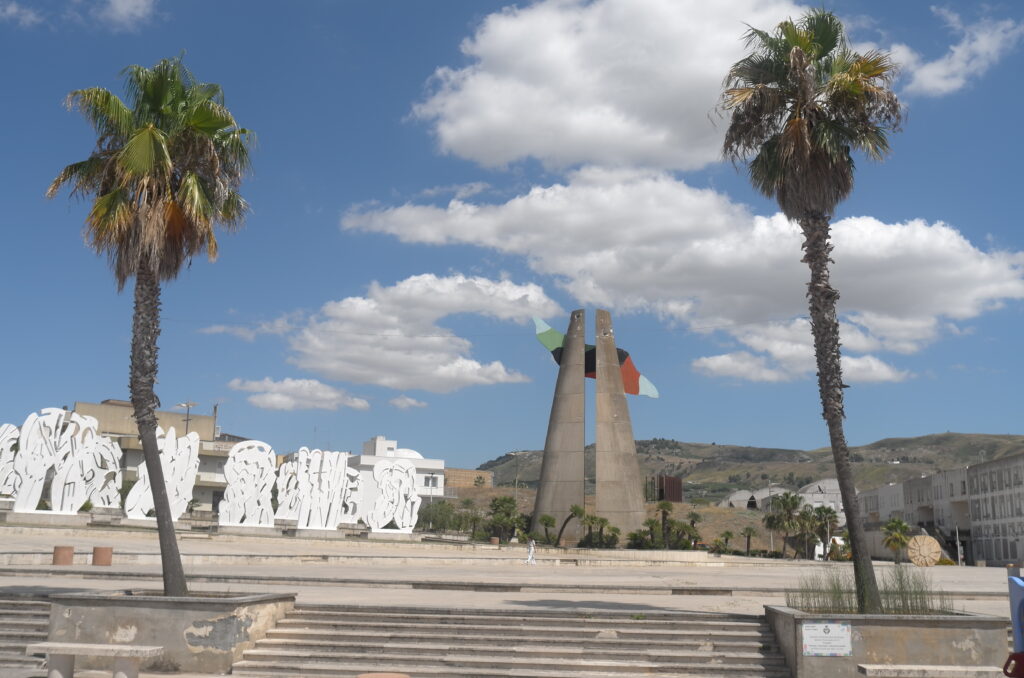
Dopo aver visitato luoghi simbolo come il Cretto di Burri, la Stella del Belìce di Pietro Consagra o la Chiesa Madre di Ludovico Quaroni, ogni scuola produce un elaborato artistico originale (installazioni, testi, fotografie o podcast) ispirato all’identità e alla resilienza della città.
03 Incontro con il territorio
Spesso i ragazzi sono accompagnati da percorsi guidati realizzati dagli studenti delle scuole superiori di Gibellina e Salemi: i giovani visitatori incontrano così i giovani del luogo.
La memoria del Belìce e l’arte contemporanea diventano strumenti educativi concreti per costruire una coscienza civica.
Il programma educativo
Il progetto “Portami il Futuro”, che accompagna Gibellina nel suo anno da Capitale, prevede un ampio programma per le scuole siciliane articolato in cinque aree: mostre, residenze artistiche, arti performative, educazione e partecipazione, simposi e conferenze.
La Fondazione Orestiadi propone alle scuole primarie e secondarie visite guidate, laboratori, incontri con artisti e percorsi interdisciplinari dedicati all’arte contemporanea e al dialogo tra le culture del Mediterraneo. Tra le attività principali:
- Trame Mediterranee: arte, scrittura, geometrie e tradizioni dei popoli del Mediterraneo, per valorizzare le differenze e l’incontro tra culture.
- Gli alfabeti dell’arte: il rapporto tra scrittura, poesia e linguaggi contemporanei, attraverso opere di artisti come Emilio Isgrò e Maria Lai.
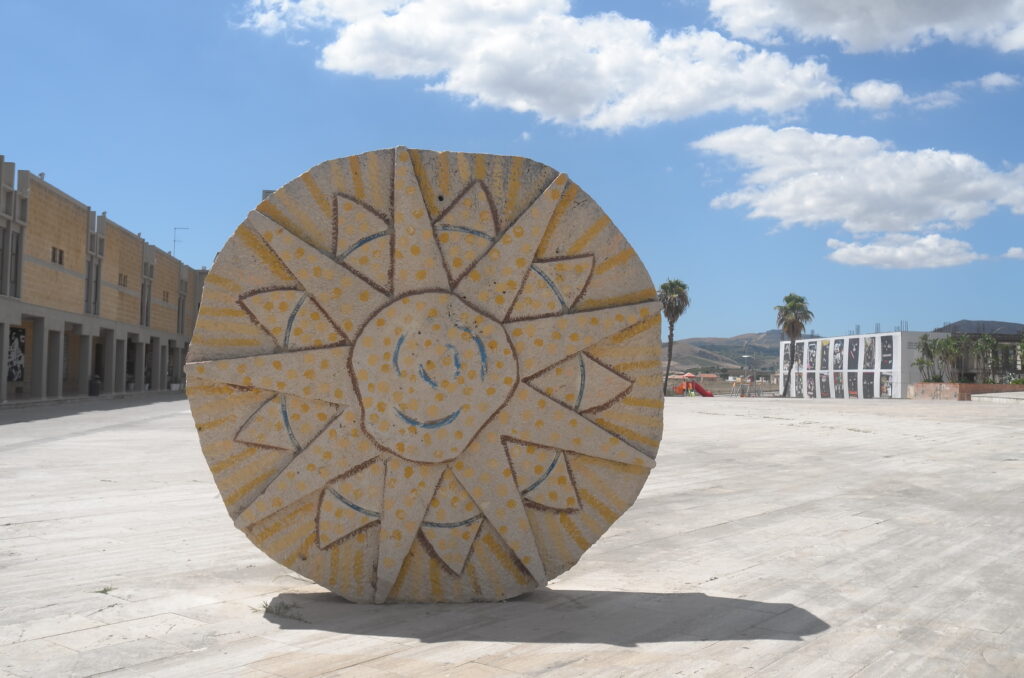
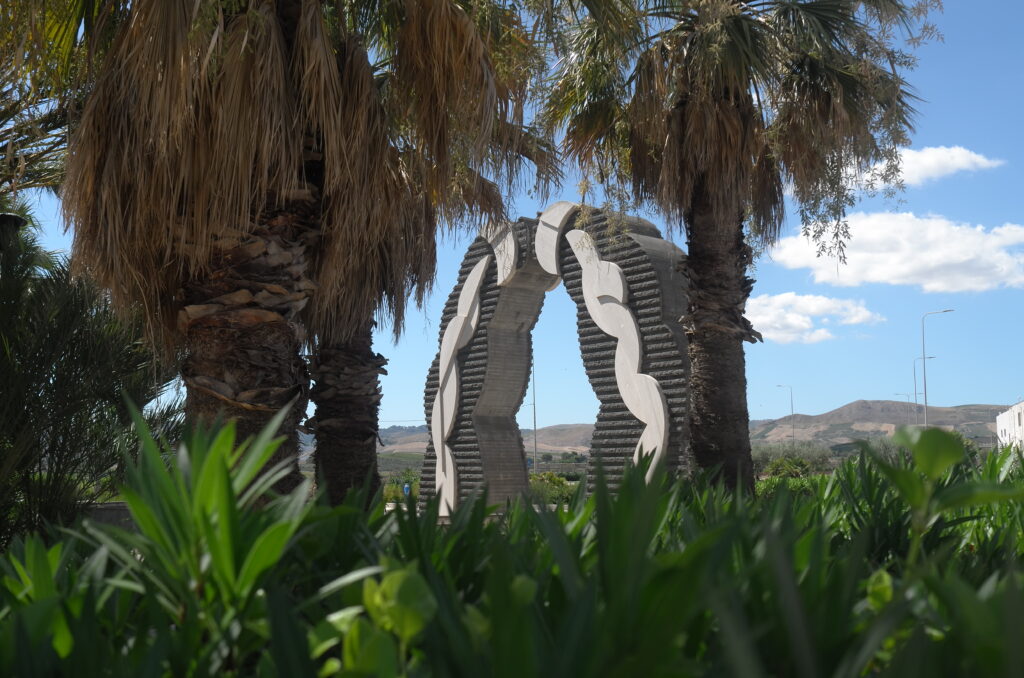
- Museo a cielo aperto: un itinerario tra le opere monumentali e gli spazi esterni del Museo delle Trame Mediterranee.
- Il Teatro contemporaneo: Le Orestiadi di Gibellina: oltre quarant’anni di teatro, arte e partecipazione civile, con attività anche per i Percorsi per le Competenze Trasversali e l’Orientamento (PCTO).
- Progetti speciali di lettura, incontri con autori, laboratori creativi e percorsi concordati con gli insegnanti.
I numeri del laboratorio diffuso
Tra febbraio e marzo 2026 la città è stata letteralmente invasa da migliaia di studenti, con un forte impatto culturale ed economico sul territorio.
163
scuole siciliane coinvolte
2.000+
studenti in visita nei primi due mesi, e altrettanti attesi
6.500
visitatori alla Fondazione Orestiadi
4.000+
presenze al Teatro di Pietro Consagra
3.600+
ingressi al MAC – Museo d’Arte Contemporanea
700.000 €
per bando regionale, fino a 7.500 € per scuola
MON-ART e Gibellina · La Fondazione Orestiadi è partner di MON-ART, e a Gibellina si è tenuto il primo incontro del progetto. Leggi anche: Primo incontro a Gibellina · Gibellina Capitale Europea
Gibellina 2026 · EN
In its year as Italian Capital of Contemporary Art, Gibellina becomes an open-air classroom: 163 Sicilian schools study the Belice earthquake, visit the artworks of the reconstruction and create works of their own.
By Lucia Cucciarelli
The Orestiadi Foundation is one of the main promoters of Gibellina 2026, together with the Municipality of Gibellina, the Ludovico Corrao Museum of Contemporary Art and the Italian Ministry of Culture. In September 2025 the Sicilian Regional Department for Education published a €700,000 funding call for schools to develop educational programmes related to Gibellina and contemporary art: each school could receive up to €7,500 for educational activities, study visits and the creation of artworks. The response was strong, with 163 schools developing projects linked to Gibellina’s 2026 cultural programme.
In April 2026 several schools launched their funded activities. The most significant news, however, concerns the 2026–2027 school year: the Region has prepared a second edition of the call, with the same €700,000 budget and grants of up to €7,500 per school.
Students at the centre
As Gibellina 2026 artistic director Andrea Cusumano and Regional Councillor for Education Mimmo Turano have stressed, the aim is not simply a school trip but to make students active participants. The programme unfolds in three stages.
01 Classroom learning and discovery visits
Schools bring into their curricula the 1968 Belice earthquake and the reconstruction led by mayor Ludovico Corrao, who called on some of the twentieth century’s leading artists.
02 Creating artworks
After visiting landmarks such as Alberto Burri’s Cretto, Pietro Consagra’s Stella del Belice and Ludovico Quaroni’s Chiesa Madre, each school produces an original work (an installation, text, photographic project or podcast) inspired by the city’s identity and resilience.
03 Meeting the local community
Visiting students are often guided by students from local secondary schools in Gibellina and Salemi, so young visitors meet young people from the area.
The memory of the Belice and contemporary art become practical tools for building civic awareness.
The educational programme
The project “Portami il Futuro” (Bring Me the Future), which accompanies Gibellina through its year as Capital, offers Sicilian schools a wide programme organised around five areas: exhibitions, artist residencies, performing arts, education and participation, and symposia and conferences.
The Orestiadi Foundation offers primary and secondary schools guided tours, workshops, meetings with artists and interdisciplinary activities on contemporary art and dialogue between Mediterranean cultures. Key activities include:
- Trame Mediterranee (Mediterranean Textures): the art, writing, geometry and traditions of Mediterranean peoples, celebrating diversity and intercultural encounter.
- Gli alfabeti dell’arte (The Alphabets of Art): the relationship between writing, poetry and contemporary languages, through works by artists such as Emilio Isgrò and Maria Lai.
- Museo a cielo aperto (Open-Air Museum): an itinerary through the monumental works and outdoor spaces of the Museum of Mediterranean Textures.
- Il Teatro contemporaneo: Le Orestiadi di Gibellina (Contemporary Theatre): more than forty years of theatre, art and civic participation, with activities for PCTO, Italy’s school-based work experience and career-orientation programme.
- Special reading projects, meetings with authors, creative workshops and programmes agreed with teachers.
The distributed laboratory in figures
Between February and March 2026 thousands of students filled the city, with a strong cultural and economic impact on the area.
163
Sicilian schools involved
2,000+
visiting students in the first two months, with as many expected
6,500
visitors to the Orestiadi Foundation
4,000+
visits to Pietro Consagra’s Theatre
3,600+
admissions to the MAC – Museum of Contemporary Art
€700,000
per regional call, up to €7,500 per school
MON-ART and Gibellina · The Orestiadi Foundation is a MON-ART partner, and Gibellina hosted the project’s first meeting.
Co-finanziato dall’Unione europea. I punti di vista e le opinioni espresse sono tuttavia esclusivamente quelli degli autori e non riflettono necessariamente quelli dell’Unione europea o dell’Agenzia esecutiva europea per l’istruzione e la cultura (EACEA). Né l’Unione europea né l’EACEA possono esserne ritenute responsabili.
Co-funded by the European Union. Views and opinions expressed are however those of the author(s) only and do not necessarily reflect those of the European Union or the European Education and Culture Executive Agency (EACEA). Neither the European Union nor EACEA can be held responsible for them.