IT
L’ARTE per una nuova civiltà nel Mediterraneo che verrà
di Lucia Cuciarelli
qEra il 1968 e il terremoto del Belice troncò storie, affetti e memorie di 70.000 sfollati fra le piccole città di Gibellina, Menfi, Montevago, Partanna, Poggioreale, Salaparuta, Salemi, Santa Margherita di Belice, Santa Ninfa. I morti furono solo 300 perché l’allora prefetto di Palermo, generale Carlo Alberto dalla Chiesa, costrinse tutti ad abbandonare le case e dormire all’aperto.
Gibellina nuova è un aggregato urbano nato da un’odissea di un sindaco che non si è arreso di fronte al disastro materiale e morale, e con la popolazione ha voluto ricostruire il centro abitato. Racconta la storia di coraggio e di intraprendenza materiale ed economica di Ludovico Corrao, un avvocato visionario che volle immaginare una rinascita attraverso l’arte e seppe coinvolgere gli artisti più espressivi degli anni 70, Alberto Burri, Emilio Isgrò, Pietro Consagra, Arnaldo Pomodoro, Franco Purini e Laura Thermes, Mimmo Palladino e tanti altri.
Tutti furono coinvolti fin dall’inizio della ricostruzione in un esperimento che anche i cittadini provati e disperati un po’ alla volta accolsero la ricostruzione nel segno dell’arte come un atto di speranza.
L’arte stimola visioni nuove e genera sentimenti ed emozioni.
Ludovico Corrao, che nel 1965 fu il legale di parte civile di Franca Viola, la prima donna in Italia a ribellarsi al matrimonio riparatore, e contribuì in modo determinante a fare cancellare il delitto d’onore dal codice penale, sapeva intuire le giuste chiavi per un nuovo futuro della sua isola. Volle dare vita alla Fondazione Orestiadi e al Museo delle Trame del Mediterraneo, che da sempre hanno forgiato civiltà, condiviso riconoscibili simbologie e mescolato i destini di popoli e i prodotti delle diverse culture, dando vita a un’interazione fra uomo e ambiente unica al mondo: il Mediterraneo.
Il Creto di Burri, l’opera di land art più grande al mondo resiste, come un candido velo adagiato sul corpo morto della vecchia città di Gibellina per preservarne il ricordo. I quartieri e le strade inglobate in questo cemento dal colore di cipria, sono un simbolo di sopravvivenza umana ma indicano anche che l’arte può dare un nuovo senso al territorio.
A questo binomio fra patrimonio culturale e rigenerazione fra arte e contemplazione, si ispira un innovativo progetto europeo concepito al tempo del Covid, e che ora fiorisce in una Sicilia dove sembra respirare una rinascita anche ambientale.
Verdi di pioggia, infiniti vigneti corrono lungo linee parallele che salgono e scendono lungo i pendii delle antiche colline moreniche, dove le uve profumano di mare. L’affascinante cornice del Baglio Santo Stefano a Gibellina, sede della Fondazione Orestiadi, per le fortissime valenze storiche, culturali e l’impegno sociale, ha accolto i partecipanti del primo del progetto europeo: “Monasteri dell’Arte” (MON-ART), in una scenografia cinematografia dove la regia della famiglia Corrao, Ludovico prima e di Francesca e Antonella dopo, ha elaborato un nuovo paradigma di dialogo fra arti figurative e decorative, fra i disegni e le geometrie simboliche si rincorrono in tutto il mediterraneo, dalle ceramiche ai gioielli nunziali per raccontare millenni di conoscenze e scambi , dalle filigrane alle stoffe, dai segni geometrici alle calligrafie dall’arabo alle altre lingue del Mediterraneo.
L’ambiziosa iniziativa, sostenuta dal programma Europa Creativa, che coinvolge sette partner da cinque paesi, intende valorizzare i monasteri storici o strutture simili, rilanciando la funzione di un bene culturale come luogo di rigenerazione artistica e di promozione sociale per la comunità.
Nell’arco di un triennio l’obiettivo è costruire una rete europea di “Monasteri dell’Arte“, luoghi dove il patrimonio culturale si fonde con l’arte pubblica per stimolare una rigenerazione culturale e sociale in linea con gli obiettivi del Green Deal europeo e del Nuovo Bauhaus Europeo
Il concetto di “Monastero dell’Arte” va oltre la semplice valorizzazione culturale di edifici religiosi storici: rappresenta un modello innovativo in cui la creatività artistica trasformerà questi spazi storici in centri dinamici di produzione artistica che non solo preservino il patrimonio culturale, ma lo rigenerino in chiave contemporanea. Si intende inoltre creare residenze artistiche in cui “Artisti Rigeneratori” collaborino strettamente con le comunità locali, promuovendo nuove dinamiche e occasioni di riflessioni personali e spirituali. Saranno pubblicati bandi per selezionare artisti e sostenere anche economicamente le loro produzioni.
MON-ART prevede la riqualificazione di sei luoghi emblematici in diverse regioni d’Europa in centri dedicati all’arte e alla cultura. Questi siti sono stati scelti per la loro rilevanza storica, il loro potenziale di integrazione con le comunità locali e la capacità di ospitare residenze artistiche e attività culturali, anche con componenti tecnologiche e valenze economiche.
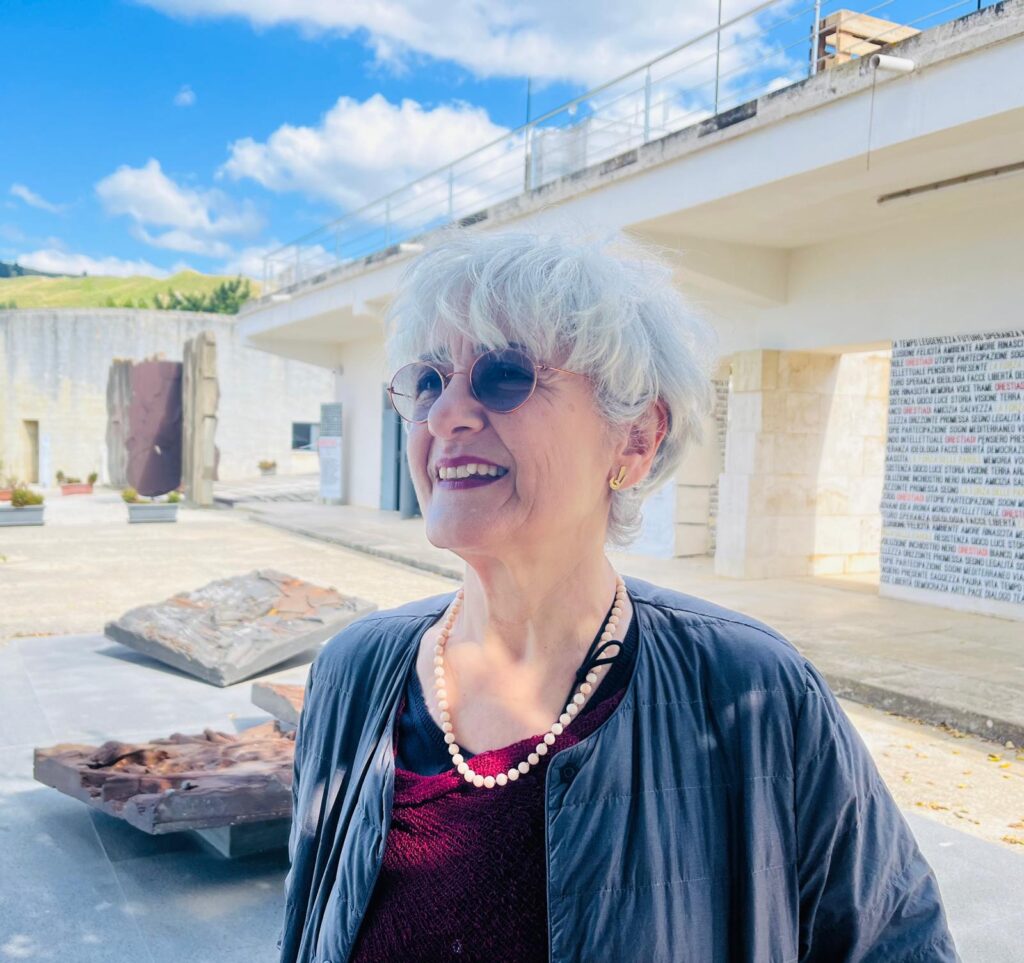
In occasione dell’evento di lancio di MonArt incontro Francesca Corrao, già docente di lingua araba alla Luiss e animatrice di molti eventi.
Che valore dai a questa nuova collaborazione europea?
La crisi internazionale in cui viviamo rappresenta una fase storica di estrema criticità che non offre prospettive né a medio né a lungo termine, perché il pensiero politico è ingessato in antiche figure retoriche che non hanno una visione nel futuro. E invece gli artisti sono capaci di rimettere al centro l’essere umano e proiettarlo in una visione creativa che guarda all’infinito.
Quali prospettive intravedi per questo progetto?
Sono ottimista per le sinergie che si sviluppano: nell’immediato moltiplica le attività di ciascuno di questi centri a partire dallo scambio di conoscenze, metodi e approcci fra operatori dell’arte di diverse aree. Ognuno potrà dare le proprie best practices e accogliere quelle degli altri con un miglioramento professionale anche in termini operativi e una ricaduta sul territorio. E’ un lavoro collaborativo che intercetta sensibilità nuove e coglie antichi echi della storia dei diversi territori; insieme si possono valorizzare le eccellenze presenti in aree lontane dai centri quali New York, Basilea o Milano, dove la finanza domina sul mercato dell’arte.In questi “Monasteri” la storia e l’armonia agiscono in profondità contribuendo a rigenerare la produzione artistica e a diffonderla in modo capillare.
In questi due decenni quali direzioni ha preso la Fondazione?
Dopo la morte del fondatore assieme ai suoi più stretti collaboratori abbiamo proseguito lungo il solco tracciato da Ludovico Corrao. Con i cittadini, di cui era stato a lungo sindaco, abbiamo portato avanti il dialogo estendendolo alle nuove generazioni sviluppando nuove attività come quelle dedicate alla fotografia con il festival “Gibellina photo Road”, i percorsi di “Lettura e Arte” per il mondo della scuola in collaborazione con gli Istituti di Gibellina, Salemi e Santa Ninfa, e in collaborazione con Rosanna Maranto il Festival “Giufà” e “Illustra Mente” con due premi di illustrazione per ragazzi e narrativa aneddotica. Si sono inoltre moltiplicate le residenze che durano varie settimane di artisti che vengono da tutto il mondo, come Yang Xian Li dalla Cina, l’algerino Rashid al-Quraishi dalla Francia, Houda Kassatly dal Libano, e dall’Italia tra gli altri Francesco Impellizzeri, Nunzio Di Stefano, Renata Boero e Pietro Ruffo.
Come vedi la funzione dell’arte nel Mediterraneo.
L’Arte nel Mediterraneo in questa fase storica sta operando fattivamente a mantenere vivi i ponti di dialogo, anche se sottotraccia, in modo impercettibile non cessa di propagare messaggi di pace e costruire una rinnovata visione che pone al centro il rispetto della dignità della vita. L’arte, come scrive il filosofo giapponese Daisaku Ikeda, oltre a dare speranza infonde una visione che va oltre il dramma del presente.
E Francesca conclude con una massima solonica:
“L’Arte o collega l’essere all’infinito o è solo un bel decoro“.
EN
Art for a New Civilization in the Mediterranean to Come
by Lucia Cuciarelli
It was 1968, and the Belice earthquake severed the stories, affections, and memories of 70,000 displaced people from the small towns of Gibellina, Menfi, Montevago, Partanna, Poggioreale, Salaparuta, Salemi, Santa Margherita di Belice, and Santa Ninfa. Only 300 people died because the then Prefect of Palermo, General Carlo Alberto dalla Chiesa, forced everyone to abandon their homes and sleep outdoors.
Gibellina Nuova is an urban aggregate born from the odyssey of a mayor who did not surrender in the face of material and moral disaster, and who, with the population, wanted to rebuild the inhabited center. This is the story of the courage and material and economic resourcefulness of Ludovico Corrao, a visionary lawyer who wanted to imagine a rebirth through art and was able to involve the most expressive artists of the 70s: Alberto Burri, Emilio Isgrò, Pietro Consagra, Arnaldo Pomodoro, Franco Purini and Laura Thermes, Mimmo Palladino, and many others.
All were involved from the beginning of the reconstruction in an experiment that, little by little, even the tried and desperate citizens welcomed. This reconstruction, marked by art, became an act of hope. Art stimulates new visions and generates feelings and emotions.
Ludovico Corrao, who in 1965 was the civil party lawyer for Franca Viola, the first woman in Italy to rebel against a shotgun marriage, and who decisively contributed to the abolition of the crime of honor from the penal code, knew how to grasp the right keys for a new future for his island. He wanted to bring to life the Orestiadi Foundation and the Museum of Mediterranean Weaves, which have always forged civilizations, shared recognizable symbologies, and mingled the destinies of peoples and the products of different cultures, giving rise to a unique interaction between man and environment in the world: the Mediterranean.
Burri’s Cretto, the largest land art work in the world, stands as a white veil laid over the dead body of the old city of Gibellina to preserve its memory. The neighborhoods and streets incorporated into this powder-colored cement are a symbol of human survival but also indicate that art can give new meaning to the territory.
This pairing of cultural heritage and regeneration, of art and contemplation, inspires an innovative European project conceived during the time of Covid, and now flourishing in a Sicily where an environmental rebirth also seems to be breathing. Green from the rain, endless vineyards run along parallel lines that climb and descend the slopes of ancient morainic hills, where the grapes smell of the sea.
The fascinating setting of Baglio Santo Stefano in Gibellina, home of the Orestiadi Foundation, due to its strong historical, cultural, and social commitment, welcomed the participants of the first European project: “Monasteries of Art” (MON-ART). This cinematic setting, directed by the Corrao family—Ludovico first, and then Francesca and Antonella—has developed a new paradigm of dialogue between figurative and decorative arts. Symbolic designs and geometries are found throughout the Mediterranean, from ceramics to bridal jewelry, telling millennia of knowledge and exchanges, from filigree to fabrics, from geometric signs to calligraphy from Arabic to other Mediterranean languages.
This ambitious initiative, supported by the Creative Europe program, involves seven partners from five countries and aims to enhance historical monasteries or similar structures, relaunching the function of cultural heritage as a place of artistic regeneration and social promotion for the community. Over the next three years, the goal is to build a European network of “Monasteries of Art,” places where cultural heritage merges with public art to stimulate cultural and social regeneration in line with the objectives of the European Green Deal and the New European Bauhaus.
The concept of “Monastery of Art” goes beyond the simple cultural enhancement of historic religious buildings: it represents an innovative model in which artistic creativity will transform these historic spaces into dynamic centers of artistic production that not only preserve cultural heritage but regenerate it in a contemporary key. It also aims to create artistic residencies where “Regenerative Artists” collaborate closely with local communities, promoting new dynamics and opportunities for personal and spiritual reflection. Calls will be published to select artists and also financially support their productions.
MON-ART foresees the redevelopment of six emblematic locations in different European regions into centers dedicated to art and culture. These sites have been chosen for their historical relevance, their potential for integration with local communities, and their capacity to host artistic residencies and cultural activities, including technological components and economic value.
During the launch event of MonArt, I met Francesca Corrao, former professor of Arabic language at Luiss and organizer of many events.
What value do you place on this new European collaboration?
“The international crisis we are living through represents a historical phase of extreme criticality that offers no medium or long-term prospects, because political thought is stuck in old rhetorical figures that have no vision for the future. Artists, however, are capable of putting the human being back at the center and projecting them into a creative vision that looks towards the infinite.”
What prospects do you see for this project?
“I am optimistic about the synergies that are developing: immediately, it multiplies the activities of each of these centers, starting from the exchange of knowledge, methods, and approaches among art operators from different areas. Everyone can share their best practices and welcome those of others, leading to professional improvement, including operational terms, and a positive impact on the territory. It is a collaborative effort that intercepts new sensibilities and captures ancient echoes of the history of different territories; together, we can enhance the excellences present in areas far from centers like New York, Basel, or Milan, where finance dominates the art market. In these ‘Monasteries,’ history and harmony act profoundly, contributing to regenerating artistic production and disseminating it widely.”
In these two decades, what directions has the Foundation taken?
“After the founder’s death, together with his closest collaborators, we continued along the path traced by Ludovico Corrao. With the citizens, of whom he had long been mayor, we carried forward the dialogue, extending it to new generations by developing new activities such as those dedicated to photography with the ‘Gibellina photo Road’ festival, the ‘Reading and Art’ paths for the school world in collaboration with the Institutes of Gibellina, Salemi, and Santa Ninfa, and in collaboration with Rosanna Maranto, the ‘Giufà’ Festival and ‘Illustra Mente’ with two illustration awards for children and anecdotal narrative.
Furthermore, the residencies have multiplied, lasting several weeks for artists from all over the world, such as Yang Xian Li from China, the Algerian Rashid al-Quraishi from France, Houda Kassatly from Lebanon, and from Italy, among others, Francesco Impellizzeri, Nunzio Di Stefano, Renata Boero, and Pietro Ruffo.”
How do you see the function of art in the Mediterranean?
“Art in the Mediterranean at this historical moment is actively working to keep the bridges of dialogue alive, even if subtly, imperceptibly, it never ceases to propagate messages of peace and build a renewed vision that places respect for the dignity of life at its center. Art, as the Japanese philosopher Daisaku Ikeda writes, in addition to giving hope, instills a vision that goes beyond the drama of the present.”
And Francesca concludes with a Solonian maxim: “Art either connects being to the infinite or it is just a beautiful decoration.”